
Used Luxury Cars in India: Are They Worth Buy ..
Aug 18 - 2026
Buy Car: +91 99090 06000 | Sell Car: +91 98250 60556 | Car Care & Modification: +91 98250 20746
03
Aug
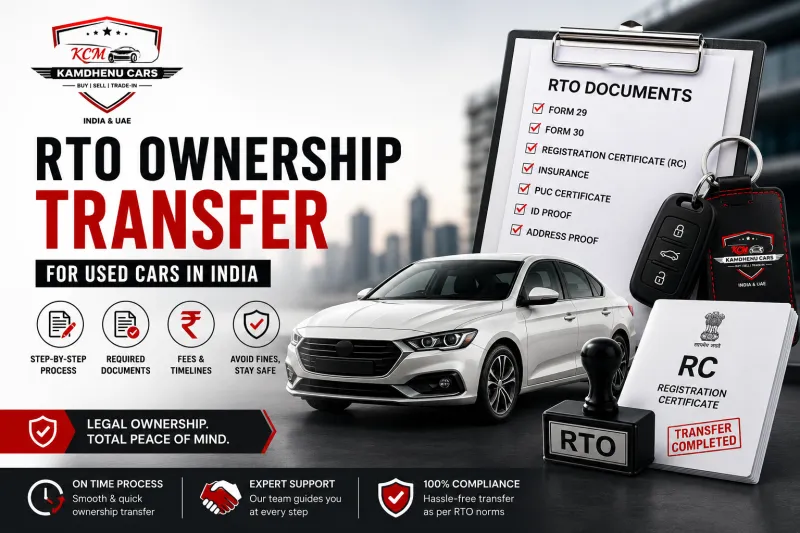
RTO Ownership Transfer for Used Cars in India: Step-by-Step
Buying or selling a used car isn't legally complete until the RTO ownership transfer is done. Handing over the keys and the cash doesn't shift liability — until the Registration Certificate (RC) is updated, the seller remains the legal owner on record, which means fines, accidents, or disputes involving the car can still trace back to them. Whether you're selling your car or picking one up from our inventory, this guide walks through the full process, the documents you'll need, and the timelines to keep in mind.
Why This Step Can't Be Skipped
Under the Motor Vehicles Act, the person named on the RC is treated as the legal owner, regardless of who's actually driving the car. If a buyer runs up traffic challans, gets into an accident, or the car is used in any legal matter before the transfer is completed, the seller's name is still the one on record. A simple handwritten sale note or affidavit isn't recognised as a legal transfer of liability — only the formal RTO process is. This is exactly why completing the transfer promptly matters for both parties, not just as a formality.
Documents You'll Need
If the vehicle is being sold interstate (moving to a different state than where it's currently registered), you'll also need a Form 28 NOC from the original RTO before re-registration can happen in the new state.
Step-by-Step Process
1. Clear any pending dues first. Before starting, pay off any outstanding traffic challans and confirm there's no negative FASTag balance linked to the vehicle — the Vahan system will typically block a transfer application if there are unpaid fines.
2. Settle the loan, if applicable. If the car has an active loan — including financing arranged through us — the seller needs to get a Loan Clearance NOC and Form 35 from the lender, and this needs to reflect on the Vahan portal before the RTO will process a transfer. This step alone can take a week or two, so plan for it early rather than at the last minute.
3. Submit Form 29. The seller typically initiates this, notifying the RTO of the intent to transfer ownership.
4. Submit Form 30 with supporting documents. The buyer submits this along with the original RC, insurance, PUC certificate, and identity/address proof, either online through the Vahan portal or in person at the RTO, depending on what your state supports.
5. Pay the applicable transfer fee. Fees vary by vehicle type and state and are periodically revised, so it's best to confirm the current fee on the Vahan portal or with your RTO rather than relying on an old figure.
6. Collect your acknowledgement and track status. Once submitted, you'll get an application reference number that lets you track the transfer status online through the Vahan portal.
7. Receive the updated RC. Once approved, the RC is updated in the buyer's name, either as a physical smart card or reflected digitally, depending on your state's process.
Timelines to Keep in Mind
For transfers within the same state, the process should generally be initiated within 14 days of the sale. For interstate transfers, this window is typically longer — commonly cited as 45 days — since it involves an additional NOC step from the original RTO. If an interstate NOC is issued, it's usually valid for a limited period (commonly around 6 months), so re-registration in the new state needs to happen within that window, or a fresh NOC will be needed.
Online, intra-state transfers can often be completed in roughly one to two weeks once all documents are in order, though delays are common if the loan NOC, challans, or document mismatches aren't sorted out beforehand. Interstate transfers generally take longer due to the additional NOC and re-registration steps in the new state.
Common Mistakes That Cause Delays
Starting without clearing challans first. Outstanding fines are one of the most common reasons an application gets stuck before it even begins.
Missing the loan NOC. If hypothecation isn't formally cleared on the Vahan portal, the RTO will typically reject the transfer application outright.
Mismatched details across documents. Names, addresses, or other details that don't match exactly between the RC, ID proof, and application forms are a frequent cause of rejection or delay.
Assuming the process is identical everywhere. Some states support fully online, faceless transfers with Aadhaar e-KYC; others still require an in-person RTO visit for document verification. It's worth checking what your specific state supports before assuming the whole process can be done from home.
Leaving it too long after the sale. Beyond the legal liability risk, delaying the transfer makes it harder to track down the seller later if any issue arises with the paperwork.
Where to Do This Online
Most RC transfer services can be initiated through the official Vahan Parivahan portal (vahan.parivahan.gov.in), managed by the Ministry of Road Transport and Highways. It's worth using only this official channel or your RTO directly — third-party "agents" charging extra for standard services aren't necessary for a process that's largely free or low-cost through official channels.
How Kamdhenu Cars Can Help
Whether you're buying or selling, the RTO transfer process can feel like the most confusing part of a used-car deal. Our team can walk you through exactly what documentation is needed and help make sure nothing gets missed, so the transfer goes through cleanly and on time. If you're getting ready to sell, our guide on how to sell your car for the best price is a good next read.
Ready to buy or sell? Explore our current inventory or get in touch with our team for guidance on the transfer process.
How long do I have to transfer a car's ownership after buying it in India? For transfers within the same state, the process should generally be initiated within 14 days of the sale. Interstate transfers typically allow more time, commonly cited as around 45 days, since they involve an additional NOC step.
What happens if I don't transfer the RC after buying a used car? The previous owner remains the legal owner on record until the transfer is completed, meaning any fines, accidents, or legal issues involving the car during that period can still be linked to their name. This is a risk for both buyer and seller, so it's worth completing promptly.
Can I transfer RC ownership fully online? In many states, yes — particularly for routine, same-state transfers through the Vahan portal, often with Aadhaar e-KYC. Some cases, especially interstate transfers or specific document verification needs, still require an in-person RTO visit.
What documents do I need if the car had a loan? You'll need a Loan Clearance NOC and Form 35 from the lender to remove the hypothecation entry from the RC before the transfer can proceed. This step should be started early, since it can take one to two weeks.
Does Kamdhenu Cars help with the RTO transfer process? Yes, our team can guide you through the required documentation and process, whether you're buying or selling a vehicle through us.
Aug 18 - 2026
.webp)
Aug 13 - 2026
Aug 03 - 2026

Jul 27 - 2026