Used Luxury Cars in India: Are They Worth Buy ..
Aug 18 - 2026
Buy Car: +91 99090 06000 | Sell Car: +91 98250 60556 | Car Care & Modification: +91 98250 20746
.webp)
13
Aug
Buying a used car can be one of the smartest ways to own a better vehicle without paying the price of a brand-new one. But when buyers start searching for which used car is best to buy in India, focusing only on the make and model can be a mistake.
Two cars of the same model and year can have completely different ownership experiences. One may have been carefully serviced and driven responsibly, while the other may have accident repairs, neglected maintenance or paperwork issues.
So, instead of asking only “Which car should I buy?”, ask “Which car is in the right condition for me?”
Here are 10 things worth checking before buying a second-hand car in India.
Before comparing cars, understand what you need from one.
For mostly city driving, a compact hatchback, compact SUV or petrol automatic may be more convenient. For frequent highway trips, comfort, stability, luggage capacity and fuel efficiency become more important. A larger family may prioritise rear-seat space and safety over outright performance.
Set a realistic total budget as well. Keep some money aside for insurance, ownership transfer, preventive maintenance and any tyres or consumables that may need replacement after purchase.
The best used car is not necessarily the most expensive car you can afford. It is the one that fits your usage without stretching your ownership budget.
2. Don’t Judge a Car by Kilometres Alone
Lower kilometres can be attractive, but the odometer should never be your only measure of condition.
A car with 60,000 km and a complete service history may be a safer purchase than a poorly maintained car showing 30,000 km.
Compare the odometer reading with service records and the vehicle’s age. Also look at wear on the steering wheel, driver’s seat, pedals and frequently used switches. Excessive wear that doesn’t seem consistent with the displayed kilometres deserves further investigation.
3. Ask for the Complete Service History
Service records can tell you a lot about how the previous owner treated the vehicle.
Check whether routine servicing was carried out on time and whether important repairs or replacements have been documented. For higher-kilometre cars, find out whether major scheduled maintenance is approaching.
A well-documented service history also makes it easier to estimate what you may need to spend after buying the car.
4. Inspect the Car for Accident or Flood Damage
A shiny exterior doesn’t always mean a clean history.
Look carefully for mismatched paint shades, uneven panel gaps, overspray, unusual welding or poorly aligned body panels. These can indicate previous body repairs.
Inside the car, check for persistent damp smells, corrosion in unusual areas or water marks underneath carpets and seats, which can warrant further inspection for possible water damage.
Minor cosmetic repairs aren’t necessarily a reason to reject a car. Structural damage, however, deserves professional evaluation before you proceed.
5. Check the Engine When It’s Cold
If possible, inspect the vehicle before the engine has been warmed up.
A cold start can reveal problems that may be less noticeable once the engine reaches operating temperature. Listen for unusual knocking or rattling and watch for abnormal exhaust smoke.
Once running, check for warning lights, fluid leaks, irregular idle and unusual vibrations.
For buyers who aren’t mechanically experienced, a professional pre-purchase inspection is worth considering.
6. Take a Proper Test Drive
A short drive around the parking area isn’t enough.
Drive the vehicle at different speeds and, where safe, experience normal city conditions. Pay attention to steering response, braking, suspension noise, gear changes and acceleration.
For an automatic car, gear changes should generally feel consistent without unexplained hesitation or harsh behaviour. With a manual car, check clutch operation and whether gears engage properly.
Also test the air conditioning, infotainment system, windows, mirrors, lights, cameras and other electrical equipment.
Small faults can quickly add to your post-purchase expenses.
7. Check Tyres, Brakes and Suspension
These items are easy to overlook because they aren’t as exciting as the engine or interior, but replacing them can significantly change your effective purchase cost.
Inspect all tyres for remaining tread, cracks and uneven wear. Uneven wear can sometimes indicate alignment or suspension issues.
During the test drive, listen for suspension noises over uneven roads and check whether the car remains stable while braking.If several wear items need immediate replacement, include those expenses when deciding whether the asking price is actually good value.
8. Verify the RC and Ownership Details
Paperwork is just as important as mechanical condition when buying a second-hand vehicle in India.
Check the Registration Certificate (RC) and confirm that important vehicle details correspond with the car you’re inspecting. You should also understand whether there is an active finance or hypothecation entry that needs to be dealt with.
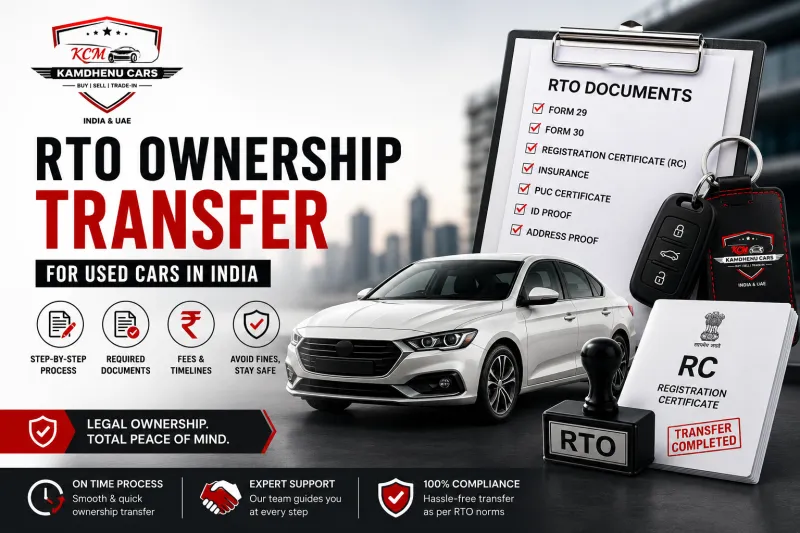
For a normal sale, Parivahan identifies Form 29 and Form 30 as key documents in the transfer-of-ownership process. Requirements can vary depending on the situation and state, so buyers should check the applicable procedure with the relevant registering authority or the official Parivahan service before completing the transaction. Never treat ownership transfer as an afterthought.
9. Verify Insurance and Other Important Documents
Check whether the vehicle has valid insurance and review the policy details. Documentation such as a valid Pollution Under Control (PUC) certificate may also be relevant during the ownership-transfer process.
If the vehicle was financed, confirm the status of the hypothecation. Parivahan lists a financier NOC among documents that may be required for hypothecation termination in applicable cases.
For an interstate vehicle, additional documentation or an NOC may be required depending on the circumstances.
Completing these checks before making the final payment can prevent unnecessary complications later.
10. Calculate the Real Cost of Ownership
A premium used car available at an attractive purchase price can still be expensive to maintain.
Before choosing a vehicle, research:
Rather than choosing a car simply because it has low kilometres or an attractive price, compare the complete picture. A slightly more expensive vehicle with transparent history and better condition can often be the smarter long-term purchase.
If you’re exploring used cars in India, you can browse the available vehicles at Kamdhenu Cars and compare options based on your budget and requirements. Before making a decision, inspect the vehicle carefully, review its documentation and take a proper test drive.
Aug 18 - 2026
Aug 13 - 2026
Aug 03 - 2026
Jul 27 - 2026